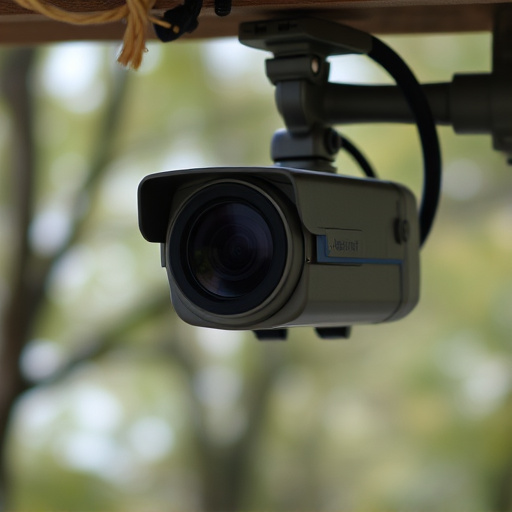
Spy camera detection in sensitive areas like homes, offices, and schools is crucial for child protection, with micro cameras hidden within everyday objects. The light reflection method allows practitioners to locate these devices without causing alarm. This non-invasive approach is valued by parents, educators, and professionals for safeguarding children from online threats. Micro cameras offer discreet surveillance options, providing high-resolution footage as compelling evidence for swift action against malicious activities while also enabling remote access to real-time video feeds. Though current detection methods like light reflection analysis face challenges, future advancements with AI, machine learning, and sophisticated sensors promise to revolutionize child protection.
Uncovering hidden spy cameras has become a critical concern in today's digital age, especially for safeguarding children. This article explores an innovative technique: detecting light reflections from micro cameras to identify covert surveillance. We delve into the science behind this method, highlighting its potential in child protection efforts. By examining how micro cameras operate and their role in maintaining safety, we also discuss challenges and future advancements in spy camera detection technology.
- Understanding Spy Camera Detection: The Light Reflection Technique
- How Micro Cameras Help in Child Protection
- Challenges and Future Prospects of Spy Camera Detection Technology
Understanding Spy Camera Detection: The Light Reflection Technique
Spy camera detection has become an essential aspect of ensuring privacy and security, especially in sensitive areas like homes, offices, and schools. One innovative technique gaining traction is the light reflection method, which is particularly effective against micro cameras used for child protection. This approach leverages the principles of optics to reveal hidden devices. By shining a specific wavelength of light onto surfaces, subtle reflections can indicate the presence of miniature cameras, often concealed in everyday objects.
The Light Reflection Technique works by analyzing the way light bounces off various materials. Micro cameras, despite their tiny size, disrupt this natural reflection process due to their lens and sensor components. Skilled practitioners can identify unusual light patterns or distortions, indicating a hidden camera's location. This non-invasive method is valuable for maintaining a safe environment without causing alarm, making it a preferred choice for parents, educators, and professionals seeking to safeguard children from potential online threats.
How Micro Cameras Help in Child Protection
Micro cameras, thanks to their compact size and advanced technology, play a pivotal role in enhancing child protection measures. These tiny devices can be discreetly integrated into various objects in homes or schools, offering a level of surveillance that was previously unimaginable. By utilizing micro camera detection through light reflection techniques, caregivers and educators can ensure a safer environment for children without invading their privacy.
The application of micro cameras in child protection allows for constant monitoring of potential hazards or abusive situations. Their high-resolution footage provides clear evidence, enabling swift action against any malicious activities. Moreover, these cameras facilitate better supervision, giving peace of mind to parents and caregivers who can remotely access real-time video feeds. This innovative approach to safety has proven to be a game-changer in the field of child welfare, as it offers an extra layer of protection that traditional methods might overlook.
Challenges and Future Prospects of Spy Camera Detection Technology
The detection of micro cameras, often hidden and used for covert surveillance, presents several technical challenges. These devices are designed to be discreet, making them nearly impossible to spot with the naked eye. Spy camera detection technology relies on advanced techniques such as light reflection analysis, infrared imaging, and thermal detection. While these methods have shown promise, they are not foolproof. Reflections from surfaces, environmental conditions, and even legitimate electronic devices can interfere with accurate detections.
Looking ahead, the future of spy camera detection technology promises significant advancements. Integrating artificial intelligence (AI) and machine learning algorithms has the potential to enhance detection accuracy by analyzing patterns and anomalies in real-time data. Additionally, the development of more sophisticated sensors capable of identifying unique spectral signatures of micro cameras will further improve detection capabilities. As technology evolves, these innovations could revolutionize child protection measures by equipping caregivers with powerful tools to safeguard vulnerable individuals from hidden surveillance devices.
The light reflection technique, a key component in spy camera detection, offers a powerful tool in the fight against hidden surveillance. By understanding how micro cameras operate and leveraging their unique light signature, we can significantly enhance child protection efforts and create safer environments. While challenges remain, ongoing advancements in technology promise improved detection capabilities, ensuring a more secure future. Micro cameras for child protection represent a promising step towards safeguarding our most vulnerable individuals.
By 2026, spy camera detection technology has witnessed significant improvements, leveraging the latest advancements in artificial intelligence (AI) and machine learning. These breakthroughs enable more sophisticated analysis of light reflections, making detection faster and more accurate than ever before. AI-powered systems can now identify subtle anomalies in light patterns, even when micro cameras are hidden within complex surfaces or strategically placed to avoid detection. Additionally, real-time video analytics allows for immediate response to potential threats, ensuring a safer environment for children in both physical and digital spaces. Unveiling Hidden Threats: Mobile Apps for Spy Equipment Detection & Child Safety